Search for "best free ATS resume checker" and you will find dozens of ranked lists. They look like research. Some of them are. Some of them are price lists wearing a lab coat.
We run a small ATS resume checker, so we spend a lot of time reading these rankings — and, recently, writing to the people who publish them to ask how a tool gets included. What we learned is worth sharing, because if you are a job seeker choosing a tool based on a "Top 10" list, you deserve to know what the ordering on that list actually means.
The four ways a ranking gets built
1. Genuine testing. The reviewer uploads the same set of resumes to every tool, records what each one reports, and ranks by results. This is slow, unglamorous, and expensive in staff time. It exists, but it is the rarest model, because it is the only one that costs money instead of making it.
2. Affiliate commissions. Many tools pay a commission when a reader clicks through and buys. A list ordered by commission rate looks exactly like a list ordered by quality — the format gives nothing away. Affiliate income is not inherently dishonest; it funds a lot of good independent writing. The problem starts when the ranking quietly follows the payout table while presenting itself as the outcome of testing.
3. Paid placement. The tool pays to be on the list, or pays more to be higher on it. Sometimes this is labelled "sponsored." Often it is not labelled at all.
4. Paid reviews and sponsored extras. A "review" is purchased as a marketing service, sometimes bundled with newsletter sponsorships and social promotion. The text reads like an evaluation because it is written to.
Real lists usually blend these models. The question is never "does money change hands somewhere?" — running a publication costs money. The question is whether placement and ordering are for sale while the page claims they were earned.
What one list told us, in writing
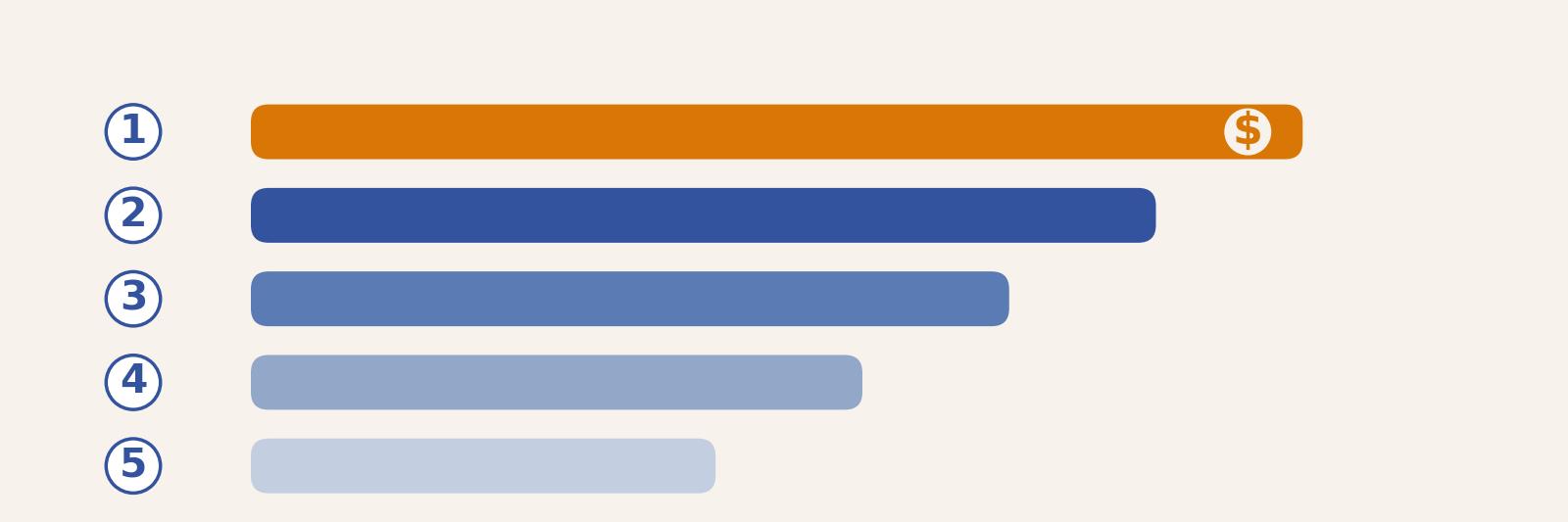
Recently we contacted a widely cited "best free ATS resume checkers" list to ask about its inclusion process — the normal question any tool maker asks. The reply, by email, was refreshingly honest: placement on that list is paid-only. A standard slot costs $300. The top position costs $500. Paid reviews and newsletter sponsorships were also available as add-ons.
To be clear about what this does and does not show. It does not show that every ranking works this way, and it does not make that particular list unusual — if anything, the publisher deserves a small amount of credit for stating the policy plainly when asked. Most readers will simply never ask. They will read "#1 Best Free ATS Checker" as a verdict, when in this case it is, literally, the most expensive seat in the room.
We did not buy a slot. Not because $300 is a large sum, but because a ranking position that is for sale cannot be won by being a better checker — and a checker that buys its rank has no reason left to stay honest about its own scores.
Why this matters more for ATS tools than for, say, blenders
A resume checker sits at an anxious moment in someone's life. A job seeker who picks a tool from a pay-to-play list gets two quiet harms. First, they may never see the tools that score resumes most accurately, because accurate tools that refuse to pay — or that have no affiliate program — are structurally excluded. Free tools are hit hardest: a checker that is genuinely free has no commission to share and nothing to sell the list, so in a commercial ranking it is not a product, it is a gap in the monetisation.
Second, paid rankings reward the appearance of rigour over rigour itself. A checker that invents a precise-looking score from an opaque model photographs better in a sponsored slot than a checker that publishes its rules and admits its limits. The ranking cannot tell the difference. You have to.
A five-minute checklist for any "best ATS tools" list
You do not need insider emails to spot a pay-to-play ranking. These checks take minutes:
- Find the disclosure page. Look for "How we make money," "Affiliate disclosure," or "How we test," usually in the footer. A real methodology page describes what was uploaded, what was measured, and what the reviewers found. A disclosure that only says "we may earn commissions" with no testing description is telling you the rankings and the revenue are the same document.
- Check whether the methodology involves actual resumes. Did the reviewer run test documents through each tool and show the outputs? Screenshots of real results, named test files, and scores that differ between tools are signs of work. Identical five-star enthusiasm for every entry is a sign of invoices.
- Look for the word "sponsored" near the top entries. US endorsement rules require paid placements to be disclosed as advertising, and search engines expect paid links to be marked as sponsored. If money is clearly flowing (every link is a tracked affiliate link) but no label exists anywhere, assume the label is the part they chose to skip.
- Ask about the placement policy. This is the test we ran. Email the publisher and ask: "How do tools get considered for this list, and is placement ever paid?" A publication with an editorial process will describe one. A price list will send you a price list.
- See whether the tool's own claims are checkable. Whatever list you end up trusting, hold the tool itself to the same standard: are its scoring criteria published? Can you reproduce what it says about your resume? A checker whose method is a secret is asking for the same blind trust as a ranking whose method is a secret.
Where we stand, since we are not neutral either
Full disclosure, because this article would fail its own checklist without it: we make ResumeScorePro, one of the checkers these lists rank (or don't). It scores resumes against a published set of rules — the same checks, in the same order, for every resume — and it runs in your browser rather than on our servers. We would rather be ranked by a list that tested it and found it mediocre than placed by a list that never ran it at all. If you use a competing checker because a transparent review convinced you, that is the system working. (Our own study of 1,000 sample resumes against real postings is published with its data and methodology, including the parts that make our checker look bad.)
Rankings are not going away, and they should not — nobody can test twenty tools themselves. But a ranking is only worth what its ordering costs the publisher to produce. When the ordering is free to produce and profitable to sell, it is not a ranking. It is inventory.
Ask who paid for the shelf.
The rules that already govern lists like these
None of this is unregulated space. The US Federal Trade Commission's Endorsement Guides (16 CFR Part 255) set the baseline for reviews and rankings published in the United States: an endorsement must reflect the honest opinion of the endorser, and any material connection between the reviewer and the seller — payment, commissions, a business relationship — must be disclosed clearly enough that an ordinary reader will notice and understand it. A ranking position that was bought, presented as the outcome of independent testing, is close to a textbook example of a connection readers would not expect and are entitled to be told about.
Search engines apply a parallel rule to the links themselves. Google's published guidance on qualifying outbound links says paid links should be marked with the sponsored attribute (rel="sponsored") so they do not pass ranking credit. A list that sells placement, links out with ordinary followed links, and carries no disclosure is failing both standards at once — the advertising one and the search one.
That gives you a firmer version of the checklist above. You do not have to guess whether a list is pay-to-play. Ask two questions with rules behind them: does the page disclose material connections the way the FTC guides describe, and are its commercial links qualified the way Google's guidance describes? A publisher doing honest testing can answer both in seconds. A publisher selling shelf space usually answers neither.
Sources and further reading
- eCFR — 16 CFR Part 255, Guides Concerning Use of Endorsements and Testimonials in Advertising (US FTC) — link checked November 2, 2026.
- Google Search Central — Qualify your outbound links to Google (rel="sponsored" guidance) — link checked November 2, 2026.